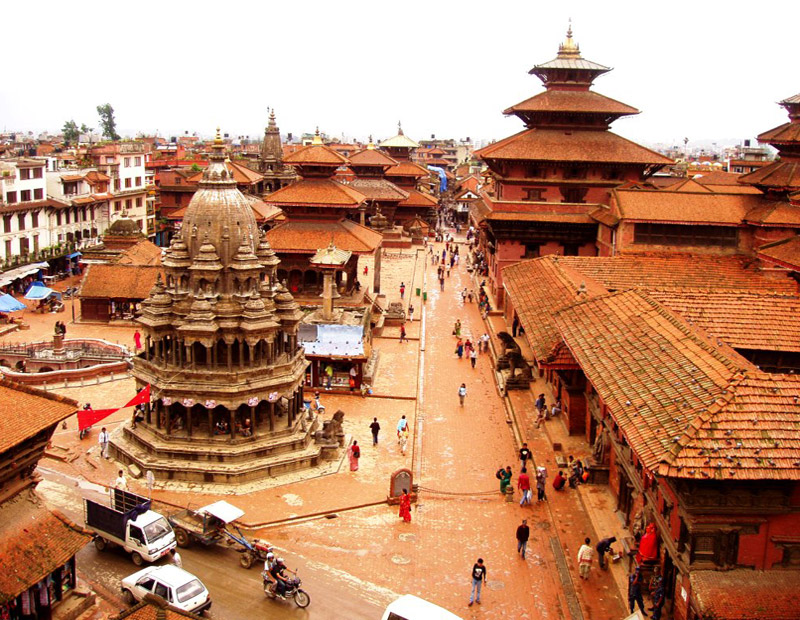
Bhaktapur (Bhadgaon – 'City of Devotees') sits 12km east of Kathmandu and stands apart from the other valley cities in one crucial way: it has resisted modernisation more completely than anywhere else in Nepal. The historic centre is pedestrianised, the traditional Newari row houses are largely intact, and the city's residents maintain a cultural identity – dress, language, craft traditions and religious practice – that gives Bhaktapur a living quality that no amount of tourism has diluted. Walking its lanes feels genuinely different from any other place in the country.
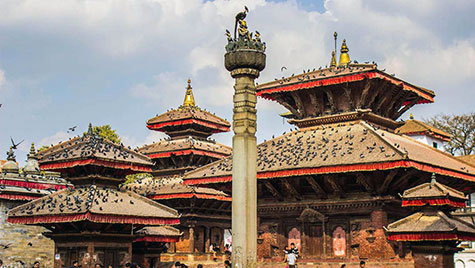
Listed as a UNESCO World Heritage Site, Bhaktapur has the finest concentration of medieval Newari architecture in Nepal. The 55-Window Palace, the Golden Gate (the pinnacle of traditional Newari metalwork), the five-tiered Nyatapola Temple and the Dattatreya complex are world-class monuments. But the real Bhaktapur is in the details: the ancient stone water spouts still used daily, the thangka painters at work in their doorway studios, the potters at their wheels in Pottery Square, the women doing laundry at community taps in traditional Newari dress.
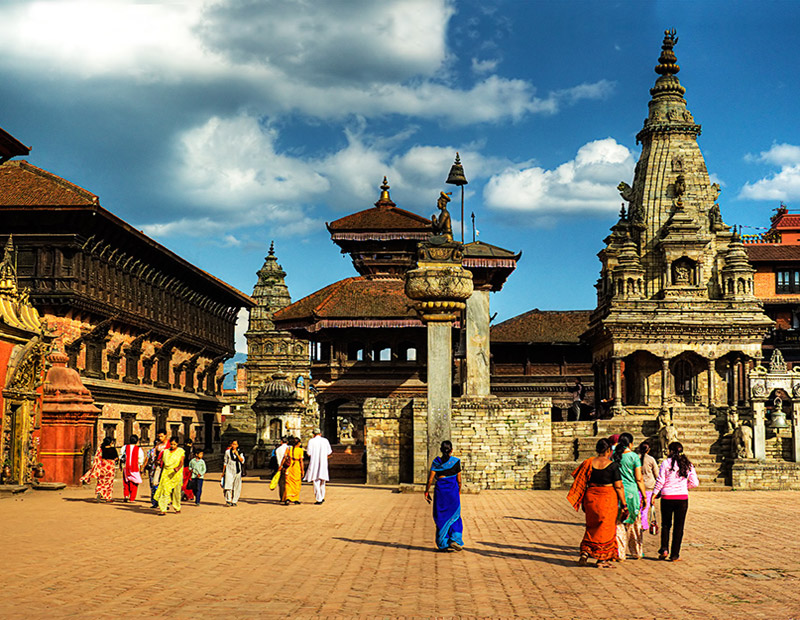
The main royal square is a dense cluster of temples, palaces and courtyards built by the Malla kings between the 12th and 18th centuries. The 55-Window Palace takes its name from the extraordinarily carved lattice balcony running along its upper floor – each window different, each a masterwork of woodcarving. The Golden Gate (Sun Dhoka) is considered the finest example of its kind in the world: a gilded copper doorway with minute detail in its religious iconography that rewards close study. The stone Vatsala Durga Temple and its bell – struck to mark the hours in the old city – complete a square that has changed little in 400 years.
At 30 metres, Nyatapola is the tallest pagoda temple in Nepal and one of the most technically accomplished buildings in South Asian architecture. Built by King Bhupatindra Malla in 1702 and completed in just seven months, it has survived every earthquake that has damaged lesser structures. The five-tiered base is flanked by pairs of guardian figures of increasing power – wrestlers at the base, then elephants, lions, griffins and finally the goddesses Baghini and Singhini, each said to be ten times more powerful than the pair below. The inner sanctum has never been opened to non-worshippers.
Bhaktapur's craft traditions are genuine, not performed for tourists. The potters of Talako Tole (Pottery Square) still wheel-throw traditional Newari vessels using techniques unchanged for centuries. The woodcarvers of Dattatreya Square work on commissions for monasteries and private homes across Nepal. The Peacock Window – a 15th-century masterpiece of intricate carved wood set into an otherwise ordinary courtyard wall – is considered one of the finest examples of traditional craftsmanship in Asia. A good guide will take you to all of these and explain the context that makes each extraordinary.
Bhaktapur is 12km from Kathmandu – 30 to 45 minutes by private vehicle. International visitor entry fee applies (not covered by the Kathmandu Valley monument pass). Half a day covers the main sights; a full day lets you explore properly. An overnight stay at Hotel Heritage Bhaktapur puts you in the city when the day-trippers have gone – a completely different and more atmospheric experience. We include Bhaktapur in most Kathmandu Valley itineraries and can arrange it as a standalone day excursion or overnight program.
Not sure what you desire yet? Nepal offers a variety of possibilities throughout the country. We offer tailor-made travel programs for you and your travel group. Create your own exclusive trip, step-by-step with us. We plan, you relax. We design, you do so if you already have specific wishes, let us know.
Getaway Nepal Adventure (P.) Ltd.
Thamel Kathmandu, Nepal
Tel: +977 98510 38 908




 TripAdvisor